Part aristocrat, part bohemian, and always wholly herself, Loulou de la Falaise moved through the world as though it were a salon without walls. She was not simply an inspiration but a presence, a rare figure whose natural eccentricity, instinct for beauty, and deeply felt sense of freedom helped shape the aesthetic language of an era.
Part aristocrat, part bohemian, and always wholly herself, Loulou de la Falaise moved through the world as though it were a salon without walls. She was not simply an inspiration but a presence, a rare figure whose natural eccentricity, instinct for beauty, and deeply felt sense of freedom helped shape the aesthetic language of an era.
Born Louise Vava Lucia Henriette Le Bailly de La Falaise in 1948, she inherited a lineage that seemed to oscillate between refinement and rebellion. Her father, the Marquis de la Falaise, was a French aristocrat. From her mother, Maxime and her grandmother Rhoda, Lady Oswald Birley, Loulou inherited her inborn eccentricity and a boldness that would come to define her life.
She moved through London, New York, and Paris with an ease that made each city seem part of her personal mythology. In New York in the late 1960s, she briefly modelled for American Vogue, where she befriended such luminaries as Diane von Furstenberg, who met her while showing Mrs. Vreeland her soon-to-be-iconic wrap dresses. “We misbehaved and became close,” von Furstenberg later recalled.
Loulou then went on to design fabrics for Halston, working alongside figures like jewelry designer Elsa Peretti. The two women often shared lunches and dinners, forming a quiet kinship within the charged atmosphere of the studio. “She was like a little elf, with this big laugh and the very powerful voice of a smoker,” Peretti remembered.
With a penchant for late nights and an effortless social fluency, Loulou moved easily through the overlapping worlds of New York nightlife, then loosely divided among the entourages of Andy Warhol, illustrator Antonio Lopez, and designers like Fernando Sanchez and Stephen Burrows. In London, she worked as a junior editor at the British magazines Harper’s and Queen. By the end of the decade, she had become a fixture of the bohemian aristocracy, that peculiar constellation of artists, models, and musicians orbiting the cultural upheaval of the time.
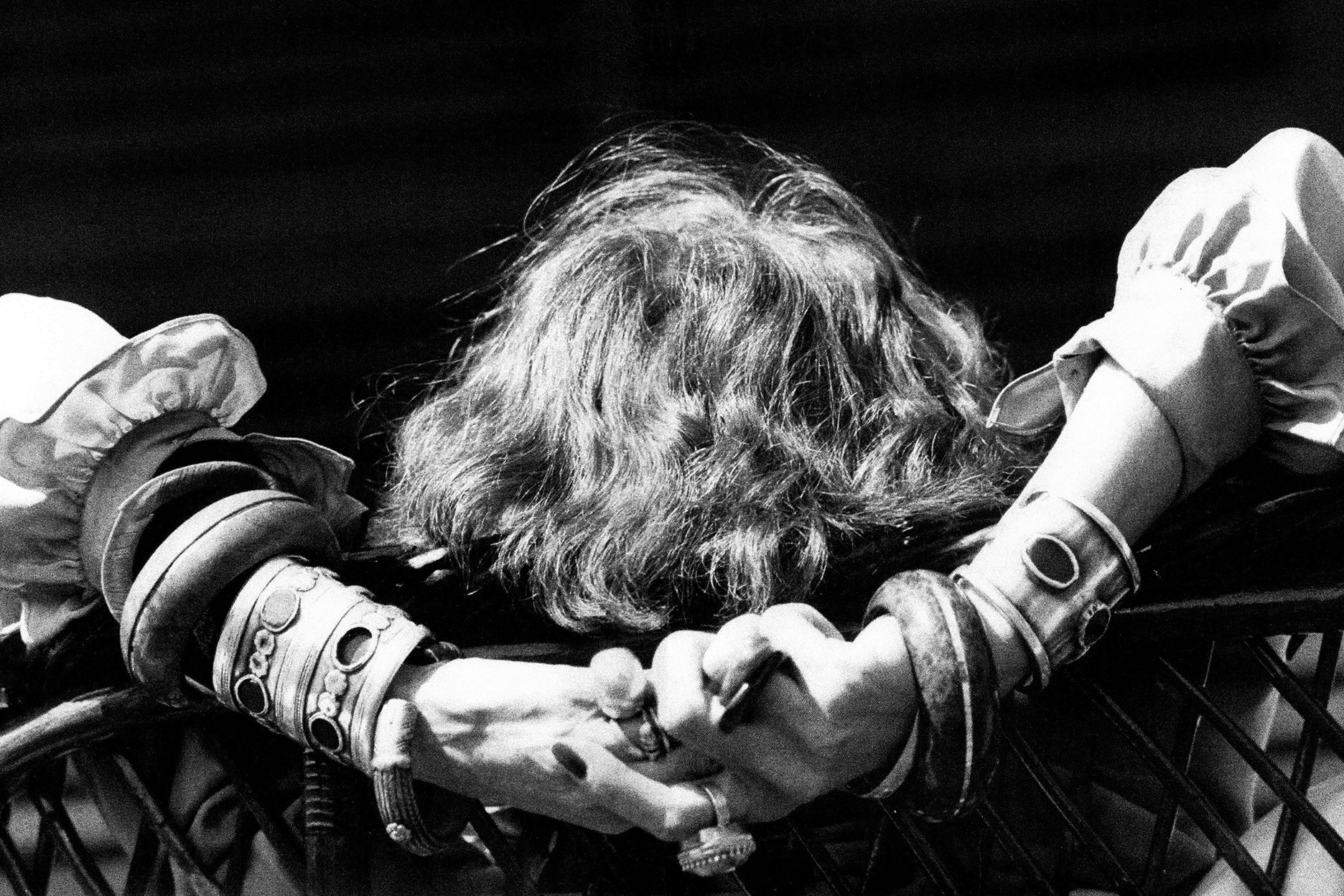
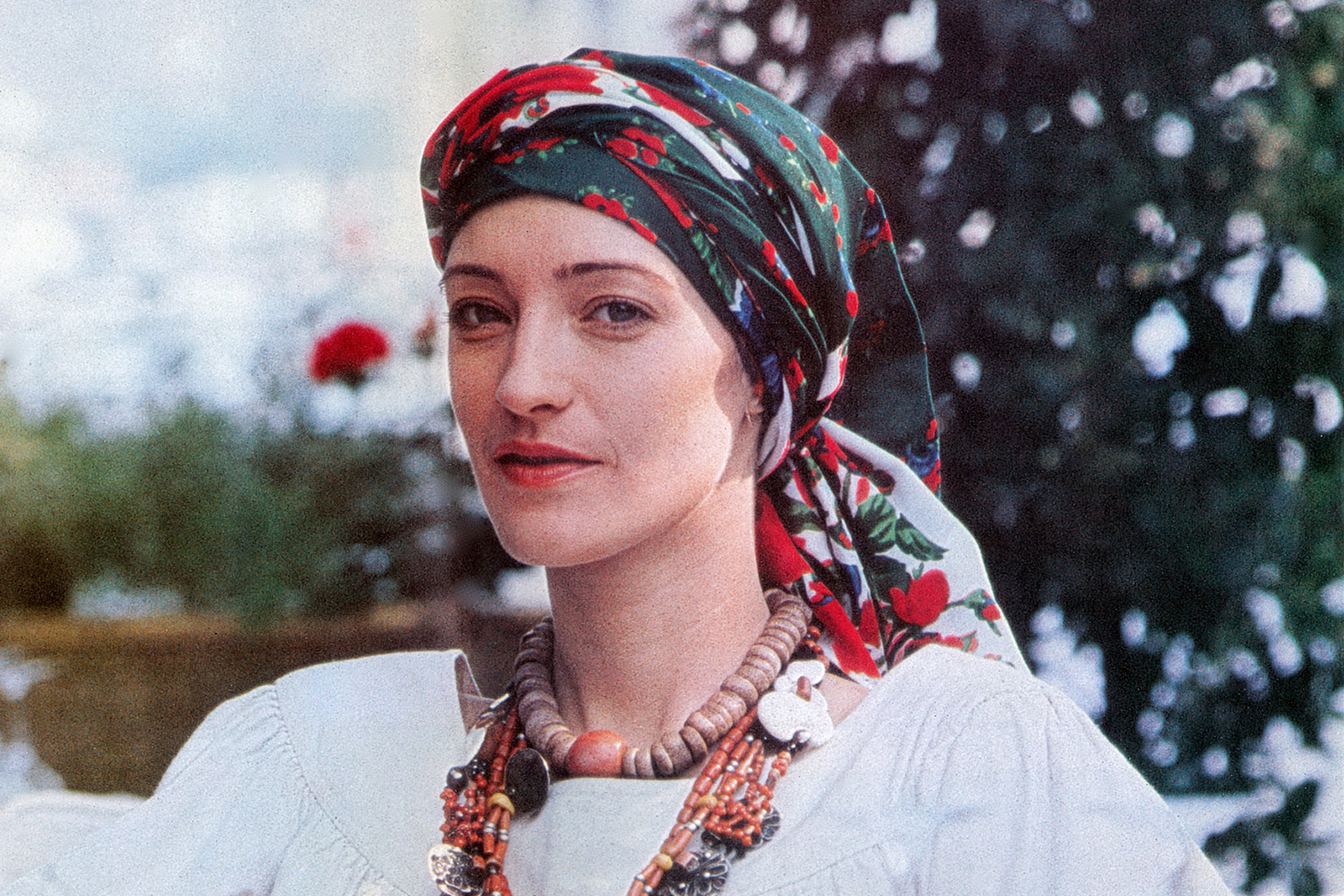
Slender, captivating, and possessed of an effortless theatricality, she seemed to embody the spirit of the decade—free, exhilarating, slightly dangerous. She dressed with an extraordinary imagination, layering antique textiles, wearing ‘gypsy skirts,’ turbans, talismanic jewelry, and treasures gathered from the Chelsea Antique Market and Les Puces in Paris. She reveled in mixing clashing colors with an intuitive understanding of fashion.
Her meeting with Yves Saint Laurent in 1968 would prove catalytic for them both. The designer, already a legend, had built a house defined by intellectual rigor and radical elegance. He was immediately charmed by this spirited young woman in her improbably chic flea-market finds. What Loulou brought was an instinctive exuberance, a sensual delight in ornament and color, a fearless fantasy, and a daring style.
She may have arrived as a muse but she soon became a collaborator, joining the house in 1972. Together they forged an aesthetic that fused Parisian refinement with something more nomadic. Moroccan caftans, Russian embroideries, Byzantine crosses, vibrant velvets, stones that felt unearthed rather than polished. Loulou assembled these elements with a kind of joyful irreverence. If Saint Laurent’s silhouettes were architecture, her adornments were the poetry draped upon them.
Their creative dialogue unfolded against the backdrop of Marrakesh, the city that became both refuge and revelation for the designer and his circle. Loulou thrived in this atmosphere. In its souks, gardens, and shifting light, one finds the same layered intensity that animated Loulou’s world. The city’s textures and pigments seemed to echo her sensibility, her love of objects with soul, surfaces marked by life, and beauty discovered in the unexpected. One could imagine her wandering the markets, discovering some improbable fragment—a necklace of amber beads, a battered brooch, a strip of embroidered silk—and instantly seeing the future life it might take on.
Yet for all the glamour surrounding her, Loulou possessed an unusual modesty about her influence. Where others approached couture with reverence, Loulou approached it with curiosity. She treated luxury not as something fragile but as something alive. Jewelry for her was not simply decoration but a form of talismanic expression. A cross, a charm, a cascade of stones worn together could suggest a private mythology, at once romantic and slightly mischievous.
Yet the true measure of her influence was less visible. She gave Saint Laurent’s world its sense of bohemian opulence, its balance of rigor and fantasy. In photographs from the period, she appears as what will become her signature: a mane of auburn hair, luminous eyes, wrists heavy with bracelets, her posture at once regal and relaxed.
After three decades of shaping an aesthetic universe recognizable by its richness and freedom, Loulou eventually launched her own fashion house, creating ready-to-wear, costume jewelry, and accessories. Even as fashion moved through its cycles of minimalism and excess, Loulou remained loyal to her particular vision of beauty as something lush, eclectic, timeless, and deeply personal.
To understand Loulou de la Falaise is to recognize that style, at its highest form, is not merely about clothes or accessories. It is about sensibility, the way a person arranges objects, colors, memories, and gestures into something unmistakably personal. She carried with her the aura of a different century, yet belonged entirely to the present moment. Perhaps that is why her legacy feels less like a chapter in fashion history and more like an ever-present atmosphere.
The sense that elegance can be playful. That glamour can contain a trace of wildness. That the most memorable style is never fully explained. Loulou understood this instinctively. Hers was a joyous sartorial imagination, a thoughtful and provocative cultural collage that placed her within an ongoing conversation between past and present. And in that conversation, she remains radiant, irreverent, and impossible to imitate.
WRITTEN BY JMM
#ARTs